
To achieve studio-quality song recordings naturally, musicians and songwriters must invest in key equipment: high-quality microphones, audio interfaces, and soundproofing. Condenser mics like Rode NT1-A and preamps like Focusrite Scarlett 2i2 ensure clarity; dynamic mics excel at handling high pressure levels. Audio interfaces like Audio-Technica US1200 digitize analog signals seamlessly. Soundproofing treats reflections and reverberations for balanced acoustics. Mixing consoles and mastering tools enhance sound, creating professional tracks that captivate listeners globally.
In the pursuit of achieving studio-quality recordings, a well-equipped setup is paramount. This journey towards sonic excellence requires an understanding of the essential tools needed to capture a song’s essence naturally. From microphones that transform sound into electrical signals to audio interfaces facilitating data transfer, each component plays a critical role. Additionally, proper acoustics and monitoring systems are vital for precise mixing and mastering. By equipping yourself with this knowledge, you’ll be empowered to navigate the process confidently, ensuring your recordings rival those produced in professional studios.
- Understanding Studio Quality Recording Standards
- Essential Hardware for Clear Audio Capturing
- Microphones: The Voice of Your Song
- Audio Interfaces: Bridging Equipment & Software
- Soundproofing Your Space for Optimal Results
- Mixing and Mastering Tools for Professional Song Production
Understanding Studio Quality Recording Standards

To achieve studio-quality recordings, understanding the essential equipment and standards is crucial for musicians and songwriters aiming to capture their artistic vision. Studio-quality implies a high level of technical excellence, ensuring your song sounds natural, balanced, and true to its intended feeling. This involves not just capturing accurate sound but also preserving the harmony and dissonance that make music as a universal language so powerful.
At the core of this process lies a carefully curated combination of hardware and software tools. A high-quality microphone is an absolute necessity, serving as the first point of contact between your voice or instrument and the recording. Condenser microphones, known for their precision and ability to capture subtle nuances, are popular choices among professionals. Moreover, a robust audio interface acts as the bridge between your equipment and the computer, enabling clean and clear digital conversion of analog signals.
For songwriters focusing on chord progressions, a well-equipped studio allows them to craft and refine their compositions meticulously. High-fidelity headphones and monitors are essential for critical listening, ensuring that every element, from vocal harmony to instrumental arrangement, is perfectly balanced. This meticulous attention to detail is what distinguishes a professionally recorded song where every instrument and vocal track complements each other seamlessly, resulting in a cohesive musical experience. To take your music therapy or artistic expression to the next level, give us a call at Artistic Expression Through Music Therapy—we can help you navigate this intricate process and unlock your creative potential.
Essential Hardware for Clear Audio Capturing

To capture studio-quality audio, whether for recording a song naturally or delving into the science behind music and memory, you need the right equipment. The process involves more than just pressing record; it requires an understanding of how sound waves translate into digital signals. Music, after all, is a universal language that transcends cultures, and analyzing lyrics and their meaning can enrich our appreciation of any track. This is where high-quality hardware comes in, enabling precise control over every sonic detail.
At the heart of professional audio recording lies an intricate web of components designed to minimize noise and maximize clarity. The microphone, often considered the first line of defense, plays a pivotal role. Condenser microphones, known for their sensitivity and versatility, are ideal for capturing the subtleties of vocal performances and acoustic instruments alike. For example, a high-end condenser mic like the Rode NT1-A can pick up the most delicate nuances, ensuring your song translates naturally from studio to speaker.
Beyond the microphone, preamplifiers (or pres) are essential. These devices amplify the signal from your mic, offering control over volume and tone before sending it to the mixer. The right preamp can enhance the inherent character of your source material, be it a singer’s voice or a guitarist’s strumming. A classic example is the Focusrite Scarlett 2i2, which provides clean, transparent amplification for a variety of inputs. This combination of high-quality mic and preamp forms the foundation for clear audio capture, enabling you to mix and master your song with precision.
Completing this essential trio is an audio interface—the bridge between your hardware and digital audio workstation (DAW). These interfaces digitize analog signals from microphones and other sources, allowing seamless integration into your recording setup. High-resolution audio interfaces like the Audio-Technica US1200 offer superior sound quality, ensuring that every detail of your song is captured accurately. By investing in these key components—microphone, preamplifier, and audio interface—you’ll be well on your way to producing recordings that truly embody music as a universal language, with lyrics and their meanings resonating vividly for listeners around the world. Explore folk traditions from across the globe, find us at World Music: Folk Traditions Explored, and discover the stories woven into each note and word.
Microphones: The Voice of Your Song

Microphones are the unsung heroes of studio recording, capturing the essence of your song with crystalline clarity. Choosing the right microphone is paramount; it translates your voice or instruments into digital signals that form the foundation of your production. For studio-quality recordings, dynamic microphones are often preferred for their ability to handle high sound pressure levels without distorting, making them ideal for vocals and live performances where accuracy is key. Condenser microphones, on the other hand, offer a flat response and exceptional detail, perfect for capturing intricate sounds in a controlled environment.
The type of microphone you select should align with your application. For voice recording, a high-quality vocal mic like a Shure SM7B or Rode NT1-A can make a significant difference in the overall sound. These microphones are designed to isolate your voice from background noise, ensuring every note is captured naturally. In live performances, stage lighting design and interactive music learning platforms can enhance the experience, but they don’t replace the critical role of effective microphone placement and selection. Understanding musical forms and the nuances of different instruments will guide you in choosing the right mic for each situation, ensuring your song translates well in any setting.
Consider the environment; a quiet studio allows for more versatile microphone choices, while a dynamic setting requires robust equipment that can withstand varying sound levels. Additionally, invest in quality headphones or monitors to critically assess the sound. Remember, the best microphone is the one that captures your song’s essence naturally. Visit us at cultural diversity reflected in musical styles to explore the vast array of microphones and recording equipment available, catering to every need from novice singer-songwriters to seasoned producers.
Audio Interfaces: Bridging Equipment & Software
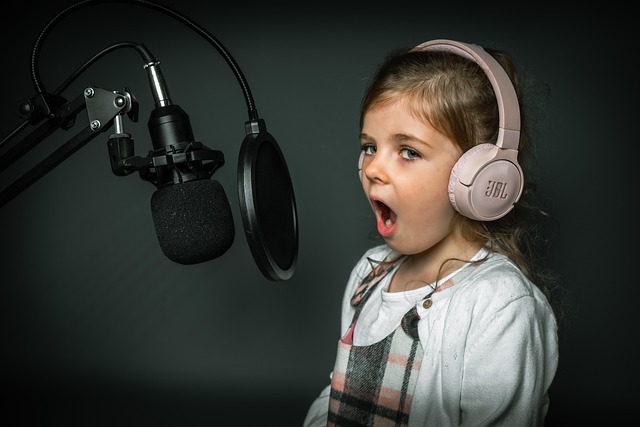
To achieve studio-quality recordings, an audio interface is a crucial component that bridges the gap between your equipment and digital audio software. Think of it as the conductor leading your musical elements into the digital realm where they can be meticulously shaped and mixed. High-resolution interfaces allow for accurate capture of your instruments’ nuances, ensuring your song sounds natural and vibrant.
Consider the difference between capturing live performances in a jazz or blues club and a symphony orchestra’s complex structure and functions. In these intimate settings, improvisation and aesthetic appeal thrive. Similarly, your audio interface should support dynamic ranges and frequencies that capture both the subtleties of acoustic instruments and the precision required for electronic production. Look for interfaces with low latency and high-fidelity inputs/outputs to prevent any distortion or delay that could affect your song’s integrity.
When selecting an audio interface, keep in mind factors like number of channels (important for multi-track recording), sample rate (affecting overall sound quality and price), and connectivity options (USB, Thunderbolt, etc.). For instance, a 24-bit/192 kHz interface offers superior detail and clarity compared to lower specifications. This precision is particularly appreciated when appreciating the complexities of classical music or aiming for intricate sound design in electronic genres.
Ultimately, investing in a quality audio interface allows you to create recordings that truly capture your artistic vision. Give us a call to discuss how the right equipment can elevate your musical creations, whether it’s improvising solos in jazz or crafting complex arrangements for a symphony orchestra.
Soundproofing Your Space for Optimal Results

Creating studio-quality recordings requires more than just top-tier equipment; it involves optimizing your space for acoustic excellence. Soundproofing is a critical aspect that often gets overlooked but significantly impacts the naturalness and clarity of your audio. In today’s digital music landscape, where streaming and distribution platforms thrive, ensuring your recording environment minimizes reflections and reverberations can transform raw recordings into professional masterpieces.
The science behind soundproofing involves understanding how different materials absorb or reflect sound waves. Hard surfaces tend to reflect sound, leading to unwanted echoes and reverb, which can distort a song’s intended harmony and dissonance. Conversely, porous materials like acoustic foam, bass traps, and diffusers absorb these waves, improving room acoustics. For instance, placing diffuser panels on walls and ceilings helps scatter reflections, creating a more balanced and controlled listening environment. This process allows musicians and producers to mix and master tracks with precision, ensuring every instrument’s harmony and dissonance resonates naturally.
Effective soundproofing involves strategic placement of materials based on room acoustics analysis. Common problem areas include corners, where sound waves can build up, and large bare walls that act as resonators. Implementing a combination of mass-loaded vinyl, acoustic panels, and foam can significantly reduce these issues. Moreover, treating doors and windows is crucial to prevent sound leaks and external noise intrusion. As the saying goes, “The best recording room is the one that doesn’t need editing.” By investing in thorough soundproofing, you empower artists to capture artistic expression through music therapy with remarkable fidelity, laying the foundation for success in both digital music distribution and streaming.
When optimizing your space, consider consulting experts who can provide tailored solutions. The “science behind music and memory” reveals that our preferences and perceptions of sound are deeply personal. Thus, professional guidance ensures your recording environment caters to your specific artistic vision. With the right soundproofing, you’ll be well on your way to achieving studio-quality results in your own sanctuary, transforming each note played into a captivating harmony that resonates with listeners worldwide.
Mixing and Mastering Tools for Professional Song Production

To achieve studio-quality recording for your song, investing in robust mixing and mastering tools is essential. These tools play a pivotal role in transforming raw audio into a polished, professional track that captivates listeners, whether it’s for a solo performance or a grand symphony orchestra. Consider the modern concert hall experience – the intricate blend of instruments, vocal harmonies, and sound effects that create an immersive atmosphere. Mastering this process demands specialized equipment capable of enhancing each element while maintaining the song’s natural balance.
Mixing consoles serve as the command center, allowing engineers to adjust levels, apply effects, and create a multidimensional soundscape. For example, a modern digital audio workstation (DAW) equipped with high-resolution plugins can emulate the intricate sound shaping achievable in a symphony orchestra’s recording studio. By analyzing lyrics and their emotional meaning, engineers can make subtle adjustments to vocals, ensuring they cut through the mix without overpowering other instruments. Conversely, for instrumental tracks, achieving clarity and definition in each instrument requires meticulous EQing and panning.
Mastering, the final step before distribution, involves further enhancing the overall sound while preparing it for various playback environments. A high-quality limiter acts as the guardian of dynamic range, ensuring consistent volume levels across different streaming platforms or physical media. This process can also involve stereo imaging techniques to create a sense of space and depth, similar to how a symphony orchestra’s sound spreads across a concert hall. By carefully balancing compression, limiting, and other mastering effects, your song will be optimized for both critical listening and mass appeal, reflecting the artistic vision while adhering to industry standards.
Remember that the journey to studio-quality recording is an art as much as it is a science. Tools like these serve as your guides, but creativity and ear training are paramount. Explore the vast landscape of music production software and hardware, draw inspiration from diverse genres, and don’t shy away from experimentation. As pop culture’s influence on music trends evolves, so too does the equipment used to craft them. Stay informed, stay curious, and let your songs sing with clarity and power.
By understanding studio quality recording standards and investing in essential hardware, microphones, audio interfaces, and soundproofing your space, you equip yourself to capture clear audio for any song. Mixing and mastering tools further elevate your production capabilities, allowing you to refine recordings for professional results. This comprehensive guide provides practical insights to help you navigate the world of high-quality music production, ensuring every note of your song resonates with clarity and power.